XRPL DeFi Explained: Lending, Yield & XLS-66
12% APR on XRP and RLUSD, no lock-up. Learn how the XRP Ledger's native lending protocol XLS-66 changes the yield landscape in 2026.
The XRP Ledger has processed payments reliably for over a decade. It settles transactions in three to five seconds, charges near-zero fees, and runs without smart contracts. What it has never done, until now, is let you earn yield on those assets without leaving the ecosystem.
That is changing fast. XRPL DeFi is no longer a roadmap item. It's an active construction site: an AMM live on mainnet, a native lending protocol in validator voting, liquid staking products launching, and a growing CeFi layer building products on top of all of it. This article maps where everything stands and what the pieces actually do.
What Does "XRPL DeFi" Actually Mean?
XRPL DeFi refers to financial applications (lending, borrowing, trading, yield generation) that run on or settle through the XRP Ledger. The XRP Ledger is not an EVM chain. It has no native smart contract layer like Ethereum. Instead, it offers purpose-built financial primitives baked directly into the protocol: a native order book DEX, an automated market maker, multi-purpose tokens, and now a lending protocol. Each of these is voted into existence by the network's validators as a protocol amendment, rather than deployed by individual developers as smart contracts.
This architecture has tradeoffs. The XRP Ledger cannot support the same degree of permissionless experimentation as EVM-compatible chains. But it can offer financial infrastructure embedded at the consensus layer: faster, cheaper, and without the smart contract attack surface that has cost DeFi users billions in exploits.
XRP DeFi, in short, is DeFi built from the protocol up. Not bolted on.
The XRP Ledger's Existing DeFi Infrastructure
Before getting to lending, it helps to understand what's already running.
- Native Order Book DEX: The XRPL has had a built-in decentralized exchange since 2012. It operates via a Central Limit Order Book (the same structure used by traditional financial markets) rather than an AMM. This lets users trade any two XRPL-issued tokens directly.
- Automated Market Maker (AMM): The AMM amendment activated in 2024, adding liquidity pool functionality that works in tandem with the order book. When a trade is processed, the XRPL automatically routes it through whichever path gives the better price: order book, AMM pool, or both. This hybrid routing makes it more capital-efficient than standalone AMM-based DEXes.
- Multi-Purpose Tokens (MPT): The XLS-33 amendment introduced a new fungible token standard optimized for stablecoins and high-volume issuance. RLUSD, Ripple's regulated USD stablecoin, benefits from this infrastructure. MPTs are also used as vault shares in the lending protocol, which makes them a foundational piece of XRPL DeFi plumbing.
- Permissioned Domains and Credentials: Two newer amendments (XLS-70 and XLS-80) let vault operators and protocol builders restrict access based on verified identity credentials, enabling KYC-compliant DeFi products and giving institutions the compliance controls they need to participate.
The XLS-66 Lending Protocol: What It Is and How It Works
The native XRPL Lending Protocol, defined by specifications XLS-65 and XLS-66, introduces fixed-term, fixed-rate lending directly into the XRP Ledger's consensus layer. There are no external smart contracts. The ledger itself governs loan terms, repayments, and vault accounting.
The system has two components that only work together.
- XLS-65: Single Asset Vaults: A vault pools deposits of one specific asset (XRP, RLUSD, or any XRPL-issued token) from multiple depositors. Depositors receive vault shares in return, represented as Multi-Purpose Tokens. Those shares track each depositor's proportional claim on the vault's assets and earned interest.
- XLS-66: The Lending Protocol: The Lending Protocol connects vaults to borrowers. Vault operators issue fixed-term loans from pooled assets. Repayments flow back to the vault and distribute to depositors according to their shares. Operators set terms: asset type, maximum vault size, who gets access (public or permissioned).
Crucially, this is uncollateralized lending. Borrowers are not required to post 120% collateral the way they would on Aave or Compound. The XLS-66 design relies instead on off-chain underwriting: vault operators assess borrower creditworthiness independently before issuing loans. This mirrors how trade finance and corporate credit actually work. A market maker needing XRP for inventory, or a payment processor needing RLUSD liquidity, can borrow against their credit profile rather than locking up excess collateral.
The isolation design matters too. Each vault is independent. A default in one does not cascade into others, which is a different risk structure than pooled DeFi systems where contagion spreads through shared liquidity.
XLS-66 Amendment Status
The XLS-66d amendment entered validator voting on January 28, 2026, following the XRPL v3.1.0 release. The XRPL Lending Protocol has since cleared a re-audit by Halborn Security, with all reported findings fully addressed by developers. Validators have continued backing the XLS-65 and XLS-66 packages. As of late June 2026, validator voting is still in progress. Amendments require 80% consensus from trusted validators maintained for two consecutive weeks to activate.
Who Is XLS-66 Actually For?
The institutional design of XLS-66 is clear from the use cases being discussed publicly.
Evernorth, for example, is actively preparing to utilize the Lending Protocol to generate institutional-grade yield on its XRP holdings. XRPL validator Vet described the protocol as a "liquidity pump" to the network, noting it will enable cross-border corridor funding, payout liquidity smoothing, and inventory financing.
XLS-66 is designed primarily for:
- Payment service providers who need to pre-fund corridors and smooth settlement gaps without locking up idle capital
- Market makers borrowing XRP or RLUSD for inventory and arbitrage positions
- Digital asset treasuries like Evernorth that want yield on institutional XRP holdings
- Regulated institutions using Permissioned Domains to operate compliant, credentialed vaults
Retail participation is possible in public vaults. But the underwriting model, with its reliance on off-chain credit assessment, is built around institutional counterparties who can be screened and monitored.
CeFi on XRPL: LendProtocol and the Consumer Layer
Before XLS-66 activates, XRP and RLUSD holders who want yield today are using a different approach: CeFi platforms built on top of the XRP Ledger.
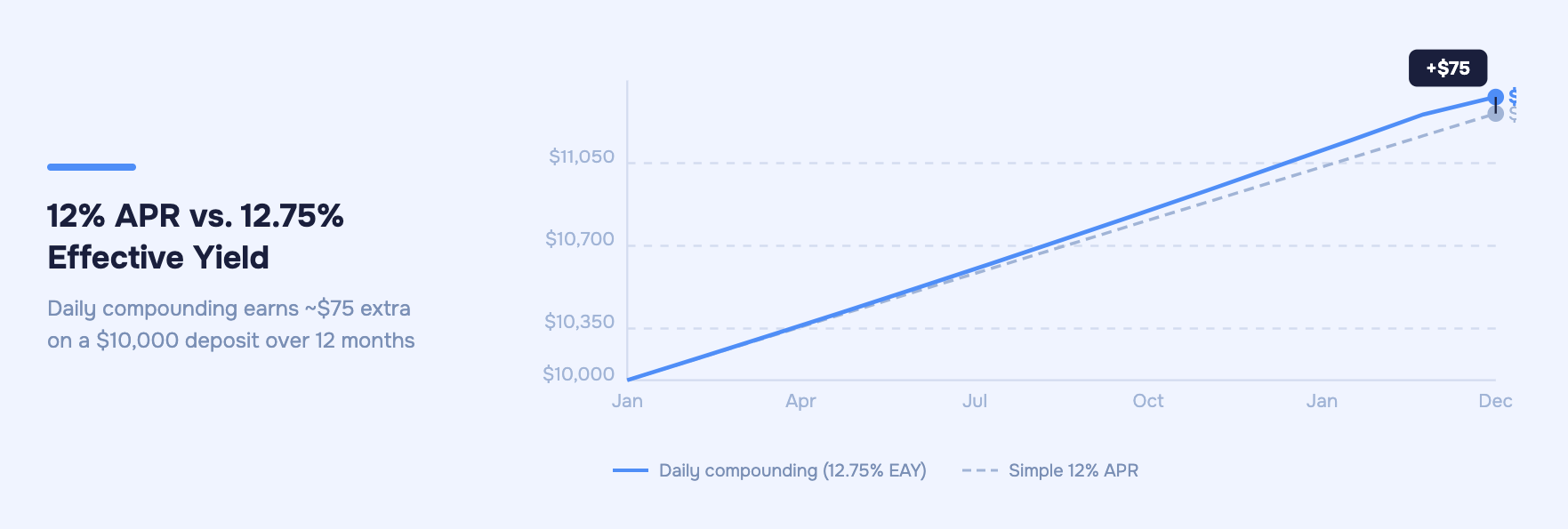
LendProtocol is one concrete example. It offers 12% APR on XRP and RLUSD deposits, paid daily, with no lock-up period. Borrowers post 120% overcollateralized crypto assets (BTC, ETH, SOL, XRP, RLUSD, or USDT) to access loans.
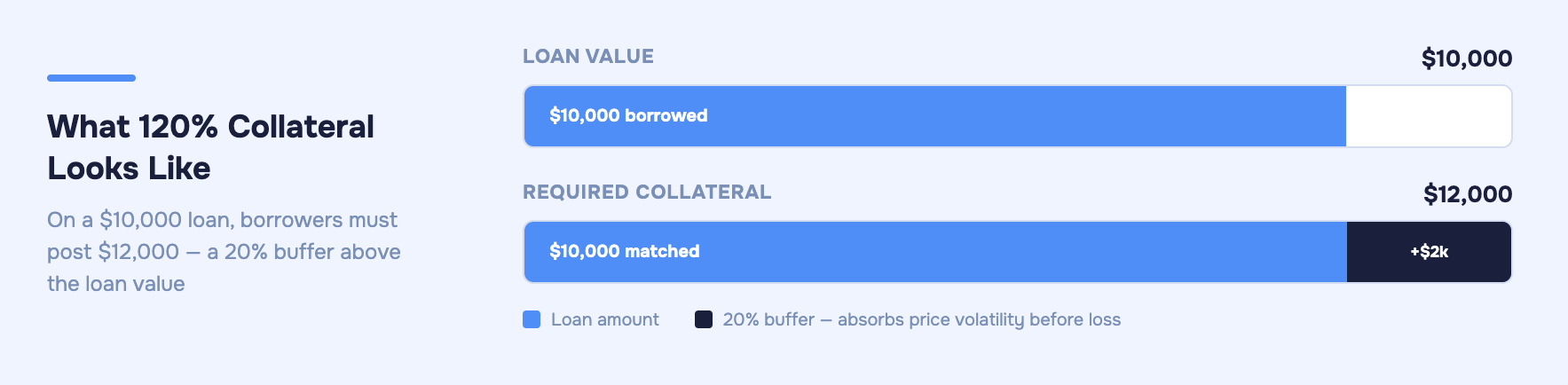
The platform earns a 0.7% spread between the borrower rate (12.7% APR) and the lender rate (12%), and it absorbs all default risk itself. If a borrower defaults, LendProtocol covers the loss, not the depositor.
This is a structurally different offer from what XLS-66 will provide. LendProtocol requires heavy overcollateralization; XLS-66 is designed for uncollateralized institutional credit. LendProtocol provides a fixed platform guarantee; XLS-66 isolates risk at the vault level with no protocol-level backstop. And LendProtocol operates today, with over 13,700 active lenders and 743 million XRP lent, while XLS-66 is still going through validator ratification.
The two products are complementary rather than competing. XLS-66 will serve institutions with established credit relationships. LendProtocol serves XRP and RLUSD holders who want a fixed-rate yield product right now, built on XRPL's settlement layer but operated as a managed CeFi service.
XRPL DeFi vs. EVM DeFi: A Direct Comparison
| Feature | EVM DeFi (Aave, Compound) | Native XRPL DeFi (XLS-66) | CeFi on XRPL (LendProtocol) |
|---|---|---|---|
| Infrastructure layer | Smart contracts | Protocol-native amendments | Centralized platform on XRPL |
| Collateral model | Overcollateralized (150%+) | Uncollateralized (off-chain underwriting) | Overcollateralized (120%) |
| Primary borrower | Crypto traders, speculators | Institutions, market makers, PSPs | Any user posting collateral |
| Risk model | Pooled (defaults socialize losses) | Isolated vaults (no contagion) | Platform guarantee (lender protected) |
| Interest rates | Variable, algorithmic | Fixed-term, negotiated per vault | Fixed (12% lender, 12.7% borrower) |
| Permissioning | Permissionless | Public or credentialed vaults | Centralized access |
| Smart contract risk | Present | None (embedded in protocol) | None |
| Settlement speed | Ethereum block times | XRPL (3–5 seconds) | XRPL (3–5 seconds) |
On EVM chains, lending logic lives in smart contract bytecode. That makes it programmable but also attackable: oracle manipulation, flash loan exploits, and reentrancy bugs have each drained hundreds of millions from DeFi protocols over the years. On XRPL, the lending logic is embedded in the consensus layer itself. The amendment goes through validator voting, public audits, and ecosystem review before it touches mainnet. Security testing for XLS-65 and XLS-66 included a $200,000 Immunefi Attackathon with over 60,000 security researchers, followed by multiple Halborn audits.
That security model comes with a real cost: no arbitrary composability, no new primitives without going through the amendment process. Whether that tradeoff makes sense depends on what you're building.
The Role of RLUSD in XRPL DeFi
RLUSD shows up everywhere in this ecosystem: as a deposit asset, a collateral asset, a vault asset, and a settlement currency. That breadth is worth understanding.
RLUSD is Ripple's regulated, fully-backed USD stablecoin native to the XRP Ledger. Its market cap has grown to over $1.26 billion. For XRPL DeFi specifically, it matters for two reasons.
- Yield without price exposure. Holders who want to earn on XRPL without taking on XRP price volatility can deposit RLUSD instead. On LendProtocol, that currently earns 12% APR, competitive against most CeFi alternatives and well above traditional savings rates. XLS-66 vaults will offer similar possibilities once active.
- Stablecoin liquidity loops. When businesses already using the XRP Ledger for payments can borrow RLUSD for operations, generate revenue, and repay loans on the same ledger, it creates a dynamic that makes RLUSD more worth holding rather than just passing through. XLS-66's design encourages longer capital parking periods, which has compounding effects on RLUSD adoption and market depth.
RLUSD also gives the XRPL DeFi ecosystem something the ledger has lacked: a stable unit of account that doesn't require bridging to another chain.
What XRPL DeFi Still Lacks
An honest map includes the gaps.
XRPL DeFi is still early. The AMM has limited liquidity compared to Uniswap or Curve. XLS-66 has not yet activated, so native lending is theoretical until the validator vote closes. The uncollateralized model is institutionally interesting but depends entirely on vault operators running their own credit assessments. The protocol is only as good as the operators who build on it.
The user experience gap is real too. XRP Ledger DeFi does not have EVM composability. You cannot chain protocol interactions arbitrarily or deploy new primitives without going through the amendment process. For institutions that want predictability and no smart contract exposure, that is a feature. For retail users accustomed to Ethereum's flexibility, it is a genuine constraint.
One more thing worth saying plainly: XRP DeFi has no yield farming in the traditional sense. Yield on XRPL comes from real loan interest paid by real borrowers. There are no token emissions inflating returns. That makes the numbers less flashy and probably more durable.
FAQ
What is the difference between XRPL DeFi and Ethereum DeFi?
XRPL DeFi uses protocol-native features (an order book DEX, AMM, and lending protocol) built into the ledger's consensus layer rather than deployed as smart contracts. This removes smart contract exploit risk but also limits composability. Transactions settle in 3–5 seconds at near-zero fees. Ethereum DeFi offers more programmable flexibility and a larger existing ecosystem, but comes with smart contract risk, gas fees, and slower finality.
What is XLS-66?
XLS-66 is the specification for the XRPL's native Lending Protocol. Together with XLS-65 (Single Asset Vaults), it enables fixed-term, uncollateralized lending directly on the XRP Ledger. Vault operators pool deposits, issue loans to institutional borrowers they underwrite off-chain, and distribute repayment proceeds to depositors. As of June 2026, the amendment is in active validator voting.
Can XRP be staked for yield?
No. The XRP Ledger uses Federated Byzantine Agreement (fBFT) consensus, not Proof-of-Stake. There is no protocol-level staking reward. XRP holders who want yield must use external products: XRPL DeFi applications like XLS-66 vaults once active, CeFi platforms like LendProtocol, or liquid staking products like mXRP (which offers 6–8% APR via an EVM-compatible sidechain).
What is LendProtocol, and is it the same as the XRPL Lending Protocol?
They are entirely separate products. LendProtocol (lendprotocol.io) is a consumer-facing CeFi platform that uses the XRP Ledger as its settlement layer. It operates with overcollateralized borrowing, a platform guarantee protecting lender capital, and a fixed 12% APR paid daily. The XRPL Lending Protocol (XLS-66) is a protocol amendment being developed by Ripple and the XRPL community that will enable institutional lending natively on the ledger. Different risk models, different collateral structures, different target users.
Is XRPL DeFi safe?
No DeFi product is risk-free. Native XRPL DeFi removes smart contract exploit risk because lending and vault logic are embedded in the protocol itself. The XLS-65 and XLS-66 amendments went through a $200,000 Immunefi Attackathon and multiple Halborn audits before reaching validator voting. CeFi products like LendProtocol carry different risks: counterparty risk to the platform operator, custody risk, and the platform's ability to absorb defaults at scale. Both deserve scrutiny.
What yield can RLUSD holders earn on XRPL?
Currently, RLUSD holders can earn 12% APR on LendProtocol with daily payouts and no lock-up. Once XLS-66 activates, RLUSD vaults on the native protocol will offer additional options, with rates negotiated per vault rather than fixed by a platform.